Embracing Technology to Foster Growth and Build Consistency

Posted by Jayme Kerr on Dec 3, 2025 9:23:32 AM

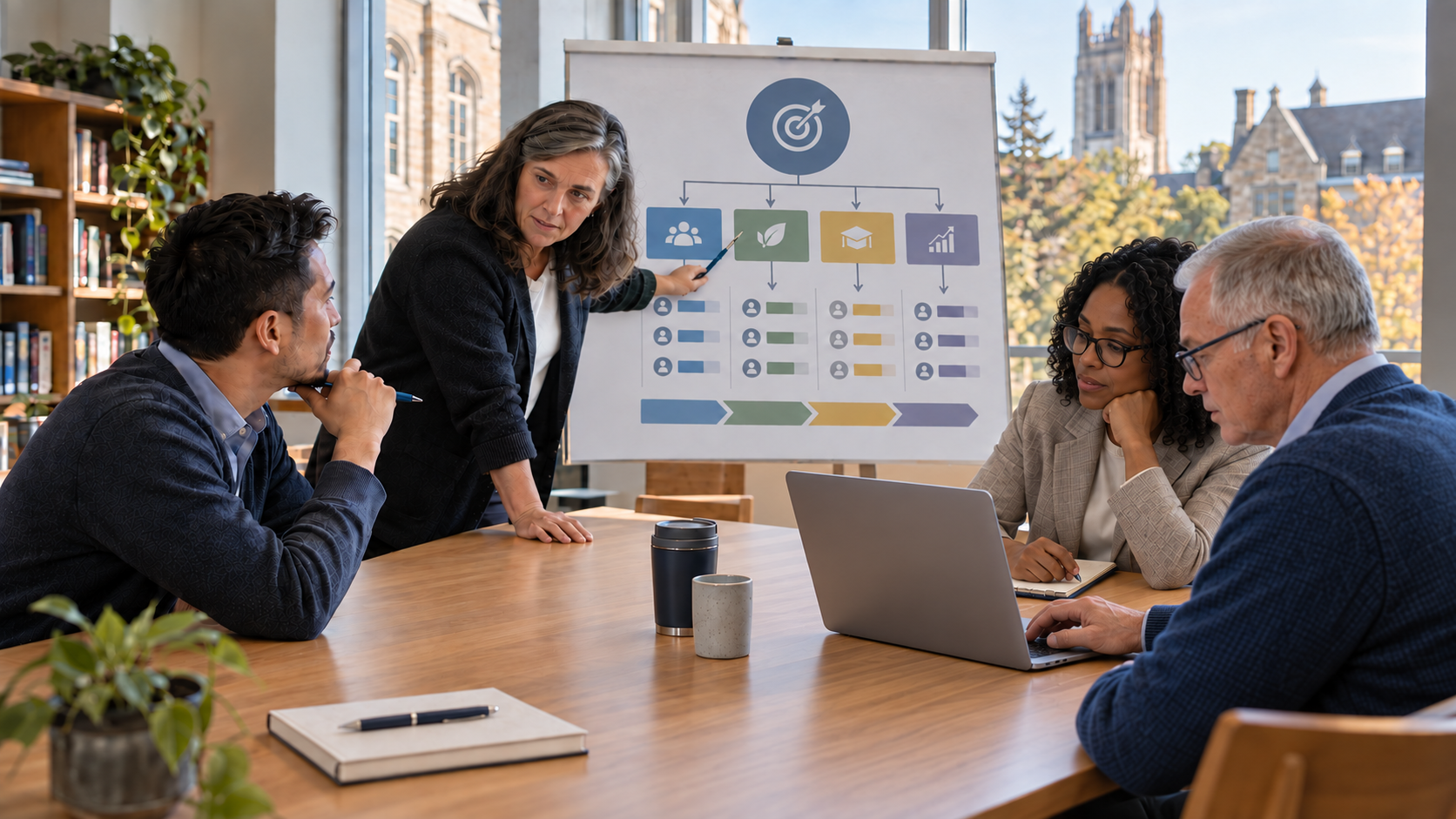
In higher education, growth and consistency are not competing priorities. They are deeply interconnected goals that depend on an institution’s ability to innovate while maintaining a reliable, mission-aligned framework. Increasingly, technology has become the bridge that connects forward-thinking ideas with sustainable, day-to-day practices. When implemented thoughtfully, the right platform creates a unified environment where planning, assessment, and accreditation work in harmony rather than in isolation.

At the National University of Natural Medicine (NUNM), this balance is essential. As a specialized institution deeply committed to holistic education, NUNM operates in a space where mission and methodology must be tightly aligned. Like many concentrated or niche institutions, they face the challenge of needing structure and flexibility in equal measure. Their team, led by leaders such as Chief Operations Officer Iris Sobottke, sought a framework that would strengthen accountability, clarify alignment, and foster a culture of continuous quality improvement. SPOL became the solution that allowed them to bring all of these needs into one integrated system.

Before adopting an integrated planning and assessment platform, NUNM experienced challenges common across many campuses. Their systems were fragmented, which led to duplication of efforts and inefficiencies across departments. Visibility into institutional priorities was limited, making it difficult to understand how goals, assessment results, and accreditation evidence connected to one another. The institution recognized a clear need for an infrastructure that could support long-term growth while ensuring that every process, from strategic planning to accreditation reporting, aligned with their mission and objectives.

Implementing an integrated platform offered exactly that. With SPOL, NUNM first focused on building out institutional goals and aligning them with department-level objectives. The use of structured approval chains encouraged accountability and reduced the siloing that often slows institutional progress. In the Assessment module, NUNM linked assessment results directly to improvement plans, ensuring that data became actionable rather than static. This same data was also connected to programmatic accreditation, creating a seamless thread from learning outcomes to compliance reporting.

The Accreditation module completed the picture by enabling consistent documentation across all standards and improving visibility through dashboards and reporting. Together, these components formed a sustainable ecosystem that supported both daily operations and long-term strategy.

The impact was immediate and meaningful. NUNM experienced greater alignment between institutional priorities and measurable outcomes. Duplication was reduced, data accuracy improved, and campus engagement grew as teams developed a deeper sense of shared ownership. Most importantly, the institution strengthened its continuous quality improvement culture through transparency, integration, and reliable data.

Several key lessons emerged from NUNM’s experience. First, scalability is not about institutional size but about fit. A system should adapt to the people and processes it supports. Second, integrated processes ensure that planning, assessment, and accreditation inform one another rather than operate independently. Third, data-driven consistency builds confidence across teams. Transparency empowers people, and empowered teams contribute to sustainable growth.

Ultimately, technology is not a replacement for institutional vision. It is the foundation that helps institutions realize that vision with clarity, consistency, and long-term success. As Sobottke shared during the session, “It’s not about the size of your institution. It’s about finding a solution that truly fits and supports everyone.”

Read More

Simplifying the Complexity of General Education Assessment

Posted by Jayme Kerr on Nov 5, 2025 12:53:53 PM

Assessing General Education (Gen Ed) outcomes has always been one of higher education’s most intricate challenges. Institutions must gather data from dozens, sometimes hundreds, of courses, align results to broad learning outcomes, and present meaningful insights that inform continuous improvement. Without the right tools, this process can easily become fragmented, inconsistent, and overwhelming.

Read More

One Platform, Two Purposes: Integrating Assessment and Planning for Institutional Growth

Posted by Jayme Kerr on Oct 7, 2025 4:04:37 PM

Across higher education, many institutions face a familiar challenge: disconnected systems that make it difficult to see the bigger picture. When assessment, planning, and accreditation processes live in separate spaces, the result is often duplication of effort, misalignment of goals, and a fragmented understanding of institutional progress.

Read More

Innovating Grant Tracking Through the Planning Module

Posted by Jayme Kerr on Sep 4, 2025 9:14:34 AM

Managing grants is often a balancing act between accountability, transparency, and alignment with institutional priorities. At the Community College of Aurora (CCA), Jasmine Bjelland and Dr. Chris Tombari have developed a creative approach that turns these challenges into an opportunity for innovation. During a recent webinar, they shared how CCA has transformed the way they track grants by leveraging the planning module in SPOL.

Read More

Embracing Change: Challenges and Innovations in Higher Education

Posted by Jayme Kerr on Aug 7, 2025 10:18:10 AM

The landscape of higher education is shifting rapidly, and institutions must evolve to meet the demands of a changing world. In our July webinar, Dr. Jonas Prida, Associate Vice President of Academic Affairs, Assessment, and Accreditation at Notre Dame of Maryland University, joined us to discuss the key challenges facing colleges and universities today and the innovative strategies some are using to stay ahead. The conversation offered both insight and inspiration, centering on how higher education can remain agile, inclusive, and forward-thinking.

Read More

From Compliance to Clarity: One Institution’s Shift to Program-Level Assessment

Posted by Jayme Kerr on Jul 2, 2025 8:16:01 AM

When Dr. Tammy Russell and Barb Murk from their institution’s Office of Institutional Planning, Assessment, and Research realized their course-level assessment model wasn’t generating usable data, it became clear that change was necessary. In a recent SPOL webinar, they shared their journey transitioning from a fragmented, inherited system to a streamlined, purpose-driven program-level assessment model and the impact it’s had across their campus.

Read More

Case Study: A Strategic Approach to Large-Scale End-User Training

Posted by Jayme Kerr on May 23, 2025 10:17:36 AM

When a large public university set out to implement SPOL as its central platform for strategic planning, its leadership knew that successful adoption wouldn’t come from top-down mandates alone. Instead, they embraced a people-first approach, building trust, cultivating buy-in, and focusing on authentic engagement with end users across campus. What followed was a large-scale, thoughtfully coordinated rollout that laid the foundation for long-term success.

Read More

End-User Training: SPOL’s On-Site and Large-Scale Virtual Options

Posted by Jayme Kerr on May 1, 2025 8:48:30 AM

Successfully implementing a new software solution requires more than just configuration—it takes thoughtful, well-executed training that equips your end users with the skills and confidence to navigate the system effectively. At SPOL, we recognize that each institution is unique, which is why we offer multiple approaches to end-user training designed to match your institution’s size, structure, and needs. Two of the most impactful training options we offer are on-site end-user training and large-scale virtual training sessions. Here’s what each of these looks like and how to decide what’s right for your team.

Read More

Simplifying Compliance: Faculty Roster Templates for CCNE, CNEA, and ACEN

Posted by Jayme Kerr on Apr 3, 2025 8:20:37 AM
Read More

Mastering Data Management in SPOL: Best Practices for Smooth Imports

Posted by Jayme Kerr on Mar 13, 2025 1:45:47 PM
Read More