
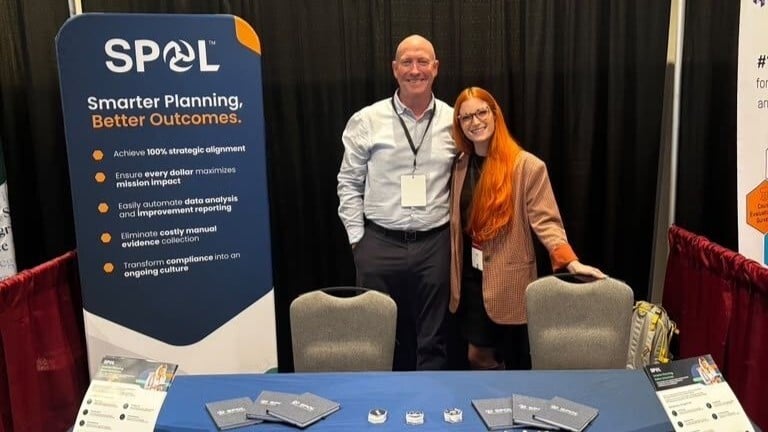
How can higher education institutions demonstrate that assessment leads to improvement? That question ran through John Kelly and Jayme Izenas’ conversations with attendees at the 2026 Indiana University Assessment Institute in Indianapolis, October 18–20. The SPOL team heard how disconnected processes and administrative demands can make it difficult to connect evidence with decisions and sustain faculty participation.
Making improvement visible
One attendee described believing their institution was supporting students effectively, while struggling to demonstrate the results consistently. Others wanted clearer ways to show how assessment findings informed changes and whether those changes made a difference.
A university leader at the event illustrated the connection with resource decisions through an outreach initiative. Tracking participation and subsequent enrollment would have helped the institution evaluate whether its investment achieved the intended objectives. The example showed why planning, budgeting, and assessment need to inform one another: the purpose of an initiative should shape how its contribution is evaluated.
Making faculty participation manageable
Conversations frequently returned to faculty workload, including duplicate data entry and the effort required to organize and report information. Attendees were interested in making greater use of existing learning management systems, including Canvas, to support assessment workflows.
Jayme and Stephanie’s session, “Course-Level vs. Program-Level Assessment: Implications for Faculty Engagement and Assessment Culture,” explored this connection. Course assessment can inform immediate teaching changes, while program assessment examines learning across the curriculum. They recommended using curriculum maps to identify meaningful course evidence that can also inform program decisions, reducing duplicate collection. Beginning with questions faculty care about and sharing how their findings influence decisions can help make participation worthwhile. The session generated thoughtful questions and follow-up conversations.
Connecting systems and supporting people
Institutions exploring new assessment technology asked about integration, usability, and ongoing support. Customer feedback also offered a perspective on what that relationship can look like in practice. Dr. Cathy Korondi, Director of Institutional Accreditation and Assessment at Illinois Central College, shared:
“When I first became involved with SPOL, I knew very little about it. After meeting Jayme at a conference and discussing SPOL’s capabilities, we began working together almost immediately.
From the beginning, the entire team has been able to handle anything I have brought to them, regardless of the angle or level of complexity. Together, we have built a robust system that integrates accreditation, assessment, planning, and budgeting into one streamlined platform.
What stands out most is how supportive and collaborative the team is. I can continually return to them for guidance, and I continue to work with them regularly. No matter how often I reach out, they always make me feel valued, respected, and confident in the work we are doing together.”
John and Jayme’s conversations reinforced a practical priority for SPOL: helping institutions connect assessment with planning, accreditation, and resource decisions, while making the work manageable for the people responsible for it. The value of that connection becomes visible when institutions can explain what they changed, why they changed it, and what happened next.
See How SPOL Can Help
Whether your institution is focused on Planning, Budgeting, Assessment, Credentialing, Accreditation, or a combination of several areas, SPOL can help bring greater structure and visibility to the work already underway.